
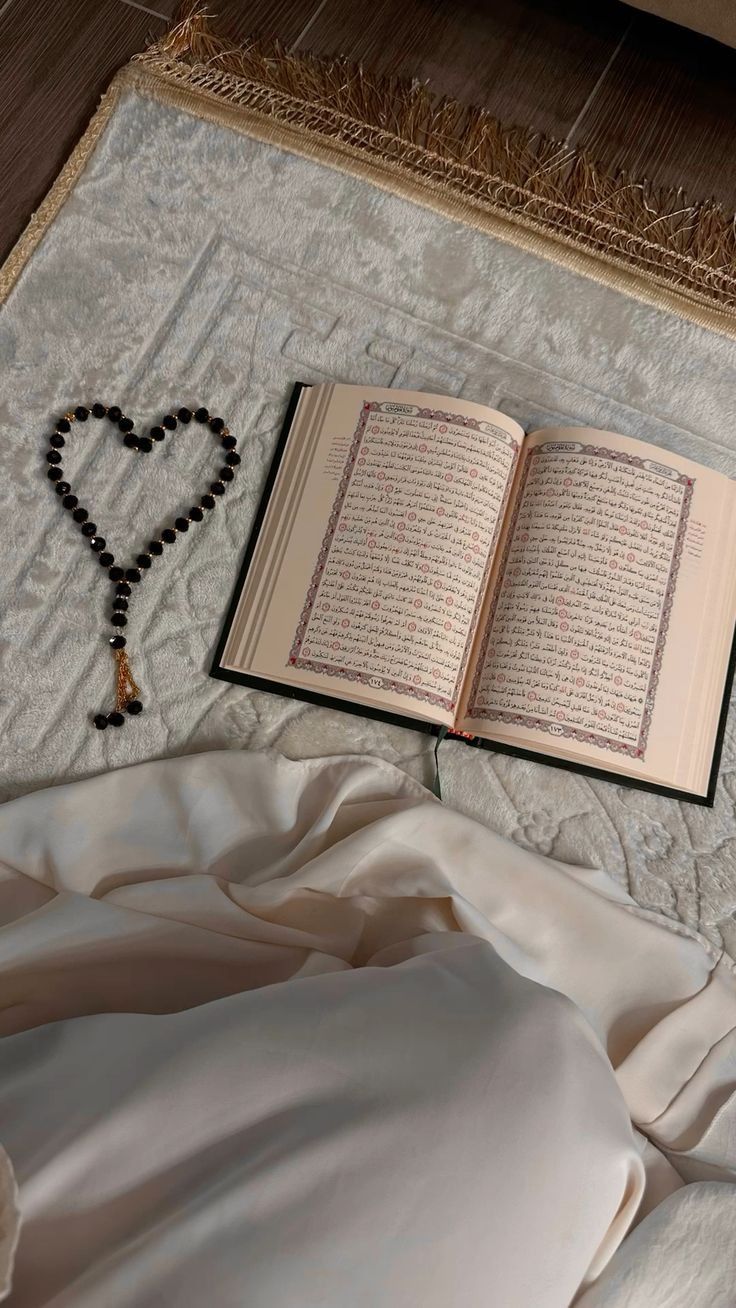
Walking into a Muslim home or a mosque, one of the most striking visual elements you’ll encounter is the presence of intricately designed carpets and mats. For many observers, the prayer rug (known as the sajjada or janamaz) is the most iconic symbol of Islamic practice.
But why are they so ubiquitous? Is it a requirement of the faith, or a cultural preference? To understand why Muslims use prayer rugs, we must look at the intersection of religious law, historical craftsmanship, and the deep spiritual symbolism woven into every thread.
1. The Core Purpose: Taharah (Purity)
The primary reason a Muslim uses a prayer mat is not for comfort, but for cleanliness. In Islam, the validity of the daily prayers (Salah) is contingent upon Taharah—ritual purity.
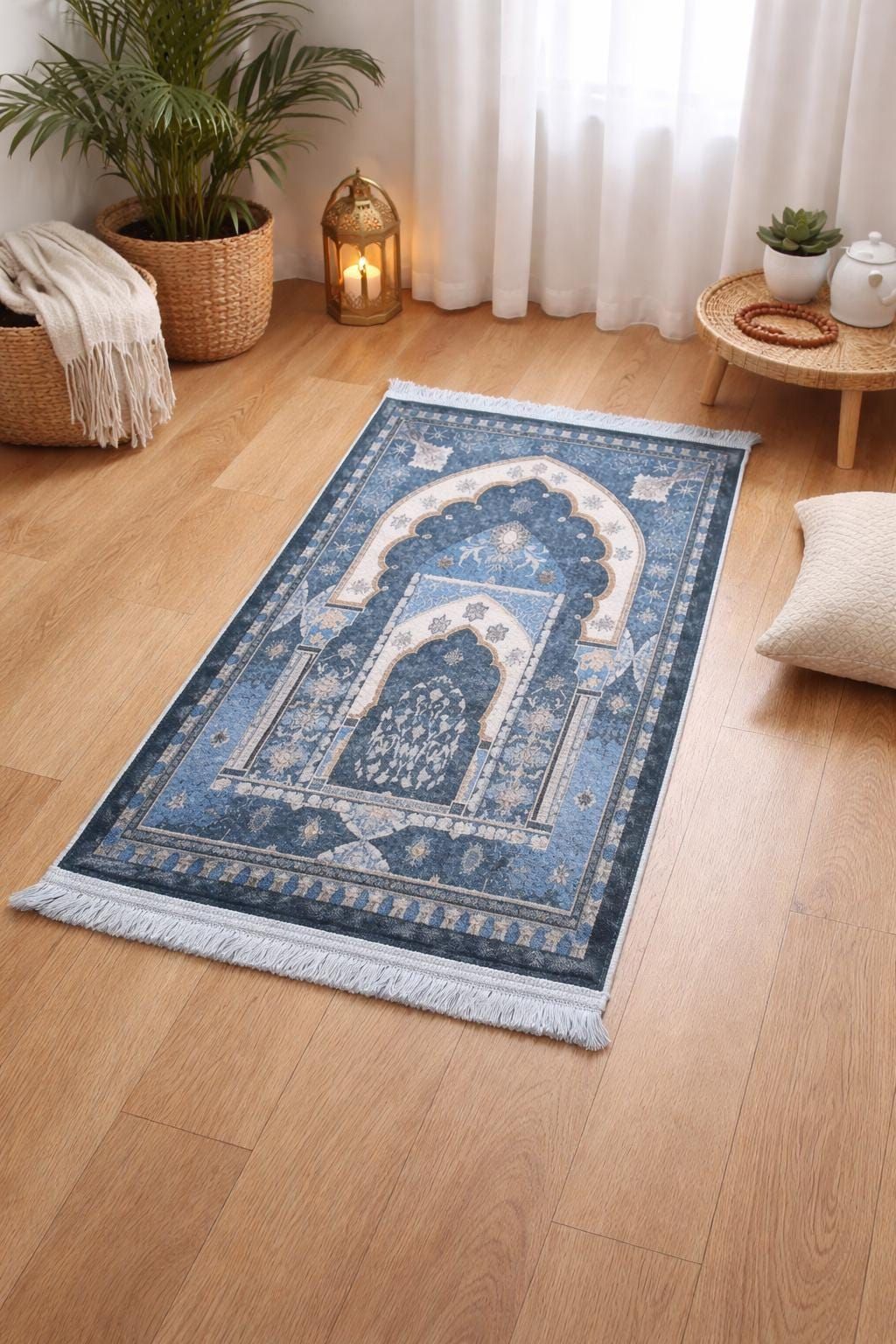
- A Sacred Space: For a prayer to be valid, the ground upon which a person prostrates must be tahir (pure/clean), free from impurities like dirt or animal waste.
- Portability: In the modern world, we cannot always guarantee the cleanliness of the floor in an office, an airport, or outdoors. A prayer rug acts as a portable sanctuary, ensuring that regardless of where a person is, they have a clean surface for worship.
- Physical Protection: While the spiritual aspect is paramount, the mat also provides a layer of cushioning for the knees and forehead during Sujud (prostration), especially on hard surfaces.
2. The Symbolic Gateway: The “Mihrab” Design
If you look closely at almost any Islamic prayermat, you will notice a specific architectural shape at the top. This is the Mihrab—an arched niche.
In a mosque, the Mihrab is the indentation in the wall that indicates the Qibla (the direction of the Kaaba in Mecca). By incorporating this arch into the design of prayer rugs, the weaver provides the worshiper with a visual cue. When the rug is placed on the ground, the “point” of the arch is directed toward Mecca, helping the believer align themselves both physically and spiritually.
3. A Brief History of the Prayer Mat
The use of specialized mats for prayer dates back to the early days of Islam. While the Prophet Muhammad (peace be upon him) often prayed directly on the earth or on a simple mat made of palm fronds (called a khumrah), the tradition evolved as Islam spread.
- The Silk Road Influence: As Islamic civilization expanded into Persia, Anatolia, and Central Asia, the prayer rug became a canvas for world-class artistry.
- Artistic Evolution: By the 15th and 16th centuries, during the Ottoman and Safavid Empires, prayer rugs were commissioned by royalty. These weren’t just functional items; they were masterpieces of silk and wool, featuring complex floral patterns, geometric symmetry, and Quranic calligraphy.
- A Symbol of Identity: Different regions developed distinct styles. A prayer mat from Turkey looks vastly different from one made in Pakistan or Morocco, reflecting the local culture and materials of the Ummah (the global Muslim community).
4. Why Do Muslims Have “So Many” Rugs?
It is common for a single household to own dozens of rugs. This often surprises guests, but there are practical and cultural reasons for the “collection”:
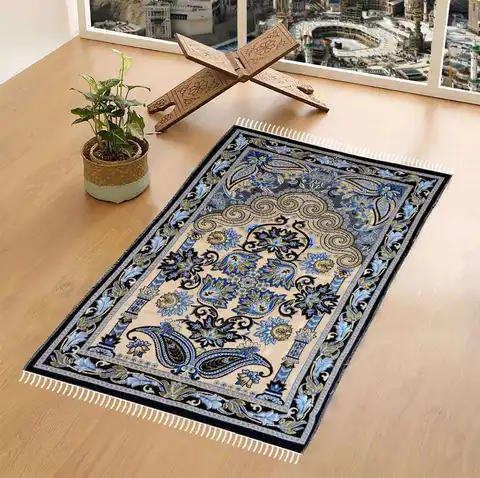
- Hospitality: In Islamic culture, hosting guests is a religious duty. A host keeps extra prayer rugs so that when friends or family visit, everyone has a clean space to pray together.
- Specific Uses: Many Muslims have a “travel rug” (thin and foldable), a “home rug” (thicker and padded), and perhaps an heirloom rug passed down through generations.
- Gifting: Islamic prayermats are one of the most common gifts for weddings, Eid, or for a child starting their journey in prayer.
- Decor vs. Devotion: Beyond the prayer mat, many Muslims use larger “Oriental” rugs as floor coverings because it is customary to remove shoes in the home. This keeps the entire house clean enough for prayer if needed.
5. The Anatomy of a Prayer Rug
Modern prayer rugs are typically made of wool, cotton, or synthetic materials. However, their layout usually follows a traditional structure:
- The Border: Often contains geometric patterns representing the infinite nature of God.
- The Field: The central area where the worshiper stands.
- The Lamp Symbol: Sometimes, a hanging lamp is depicted within the Mihrab arch, symbolizing God as the “Light of the Heavens and the Earth.”
- The Pillars: Some designs include pillars on either side of the arch, representing the pillars of the mosque or the Five Pillars of Islam.
6. How to Use and Respect a Prayer Mat
While the rug itself is not “holy” in the sense of being an idol, it is treated with great respect because of the purpose it serves.
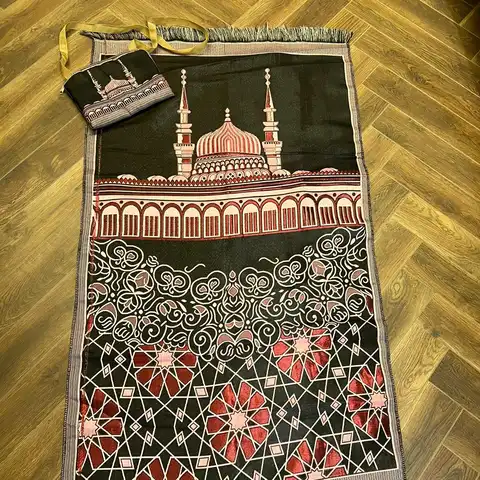
- Placement: It should always be placed on a flat surface facing Mecca.
- Folding: After prayer, many Muslims fold the rug immediately. This is done to prevent the mat from getting dirty and to signify that the “sacred time” of prayer has concluded.
- Storage: It is respectful to store prayer rugs in a clean, elevated place rather than leaving them on the floor where they might be stepped on by people wearing shoes.
FAQs About Muslim Prayer Rugs
Q: Is it mandatory for a Muslim to use a prayer rug? A: No. A Muslim can pray on any clean surface—grass, a towel, a clean hardwood floor, or a stone pavement. The prayer mat is a tool of convenience and tradition used to guarantee cleanliness.
Q: Why do some rugs have a compass built into them? A: Many modern “travel” prayer rugs include a small compass to help the user find the Qibla (the direction of Mecca) when they are in an unfamiliar location or hiking outdoors.
Q: Can non-Muslims buy or use prayer rugs? A: Yes. Many people appreciate prayer rugs for their aesthetic beauty and craftsmanship. However, if using one, it is polite to be mindful of its religious significance and avoid stepping on it with shoes.
Q: What is the difference between a regular rug and a prayer rug? A: Size and design. A prayer rug is typically sized for one person (approx. 2.5ft x 4ft) and almost always features a “directional” design like an arch or a point, whereas a standard rug is usually symmetrical.
Q: Why are some prayer mats padded or made of orthopedic foam? A: As the global Muslim population ages, there is an increasing demand for orthopedic prayer mats. These help elderly or injured worshipers perform their prayers without joint pain during prostration.
Conclusion
The prayer rug is more than just a piece of fabric; it is a portable bridge between the mundane world and the divine. Whether it is a simple woven mat from a village market or a lush velvet islamic prayermat from a high-end boutique, its purpose remains the same: to provide a clean, beautiful, and focused space for a believer to stand before their Creator.
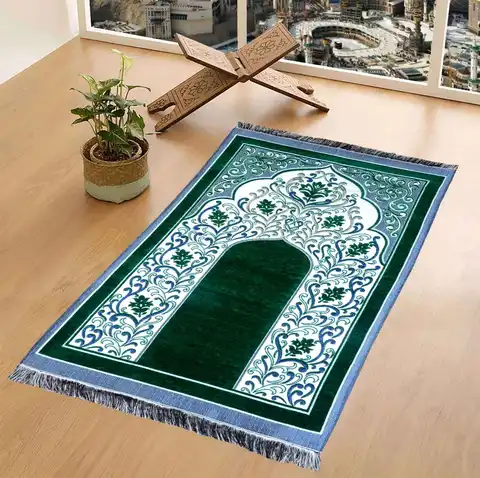
By understanding the history and significance of prayer rugs, we gain a deeper appreciation for the ritual, discipline, and art that defines the Islamic faith.
More Textiles
- Being one of the leading textile manufacturers and exporters in India, we at More Textiles take pride in bringing quality textile products to your homes!
- With over four decades of unfettered commitment and revolutionary product designs in the textile industry in India, we offer innovation-backed world-class textile products to our customers. We constantly strive towards dedication, business ethics, and customer satisfaction.
- Manufacturing superior quality, organic, home textiles in India, we are here in this sector to give your homes, an aesthetic upliftment like never before.
One thought on “Why Do Muslims Use Prayer Rugs? Significance & History Explained”