
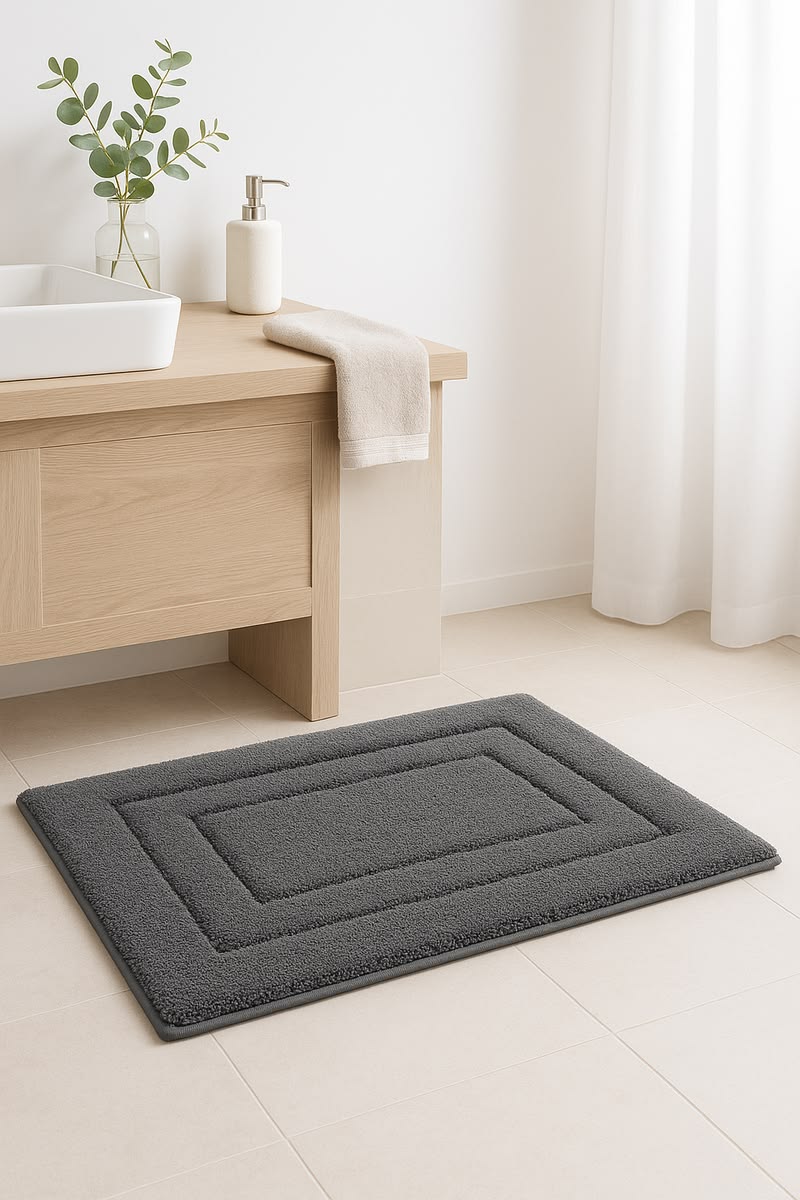
There is a specific kind of dread that comes with stepping out of a warm, relaxing shower only to feel your foot slide across a slick tile floor. In that split second, the “spa-like” serenity of your bathroom vanishes, replaced by a frantic grab for the towel rack.
At More Textiles, we believe your bathroom should be a sanctuary, not a hazard zone. As one of India’s leading manufacturers and exporters of premium bath textiles, we’ve mastered the art of combining high-end aesthetics with the technical necessity of the rubber-backed bath rug.
In this guide, we’ll dive into why the backing of your rug is just as important as the pile on top, how Indian manufacturing is setting global benchmarks, and how to choose a rug that stays exactly where you put it.
The Invisible Hero: What is Rubber Backing?
While the top of a bath rug gets all the glory for its softness and color, the bottom does all the heavy lifting. “Rubber backing” is a broad term for a non-slip layer applied to the underside of a textile to increase friction and block moisture.
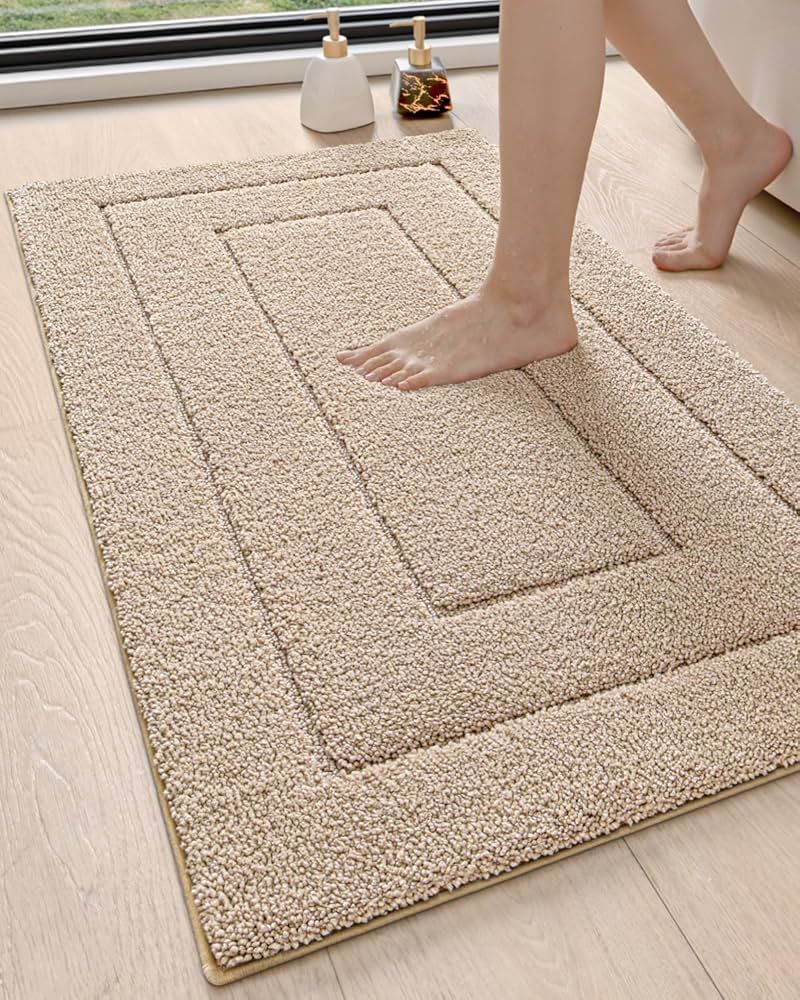
Without this layer, a rug is simply a loose piece of fabric. On polished porcelain or marble—the standard for modern bathrooms—a loose rug acts like a lubricant, making a slip almost inevitable. By engineering rugs with high-quality grips, we ensure that every step you take is grounded.
The Anatomy of a High-Performance Bath Rug
To understand what makes a rug “leading-tier,” we have to look at the construction layers:
- The Face Yarn: Usually cotton, microfiber, or chenille. This handles water absorption and tactile comfort.
- The Primary Base: The fabric into which the yarn is tufted.
- The Bonding Layer: An adhesive that keeps the loops from pulling out.
- The Non-Slip Backing: The final layer of TPR or Latex that meets the floor.
Why India (and More Textiles) Leads the Global Market
India has transitioned from being a traditional weaving hub to a high-tech manufacturing powerhouse. Based in the textile heartland of Panipat, More Textiles serves as a bridge between ancient craftsmanship and 21st-century safety standards.
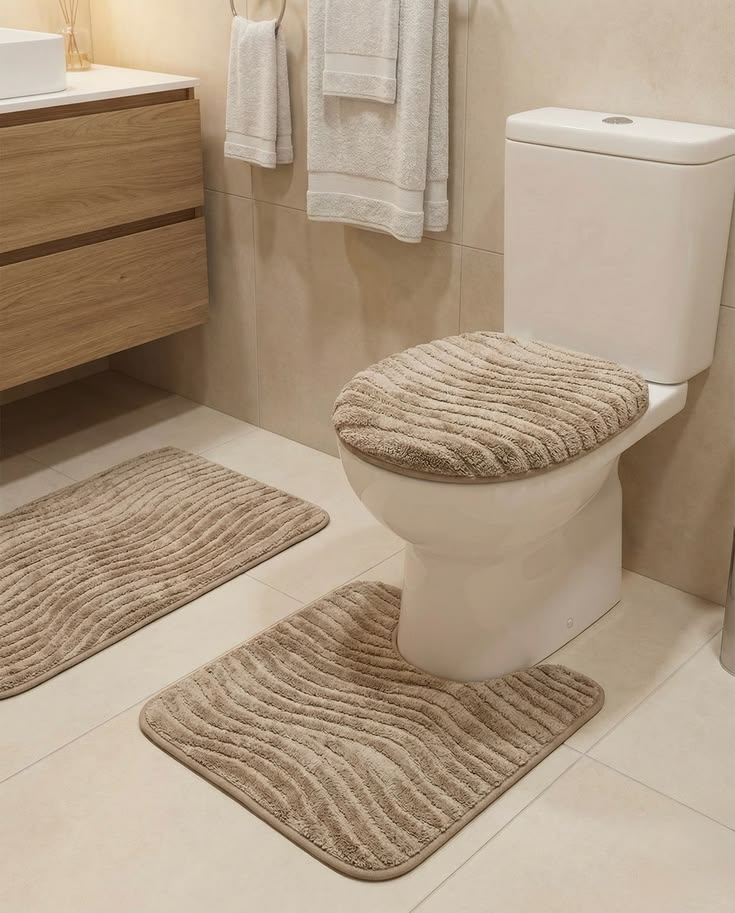
1. Precision Engineering
Our export-quality rugs undergo rigorous testing. We measure “Coefficient of Friction” to ensure that our rugs don’t just “kind of” stay put, but actually provide a stable surface even when the floor is damp.
2. Sustainable Innovation
The world is moving away from cheap, disposable plastics. As a leading exporter, we utilize TPR (Thermoplastic Rubber). Unlike traditional PVC, TPR is recyclable, odorless, and doesn’t crack under the pressure of repeated washing.
3. Design Versatility
Being a manufacturer in India allows us to play with textures that machines in other parts of the world can’t replicate. From hand-carved high-low piles to intricate tufted patterns, we bring a level of “artisan luxury” to a functional safety product.
Choosing Your Grip: A Comparison Table
Not every rubber backing is created equal. Depending on your floor type and washing habits, you might prefer one over the other.
| Feature | TPR (Thermoplastic Rubber) | SBR (Synthetic Latex) | Spray-Latex |
|---|---|---|---|
| Durability | Extreme (50+ washes) | Moderate | Light |
| Eco-Friendliness | High (Recyclable) | Low | Moderate |
| Grip Strength | Very High | High | Moderate |
| Best For | Heavy-duty family baths | Guest bathrooms | Low-profile decorative mats |
Export to Sheets
2026 Trends: The Evolution of the Bath Rug
The trend for 2026 is “Functional Maximalism.” People want products that do more than one thing.
Earth-First Materials
We are seeing a massive shift toward recycled cotton faces paired with bio-based rubber backings. The modern consumer wants to know that their comfort doesn’t come at the cost of the planet.
The “Dry-Fast” Revolution
At More Textiles, we are pioneering “vented” backings. These are rubber grips with micro-perforations that allow the rug to breathe. This prevents the “sour” smell often associated with thick rugs by allowing air to circulate through the fibers to the floor and back.
Deep, Moody Textures
Visual depth is in. We are moving away from flat, shaggy rugs toward architectural tufting. Patterns inspired by Japanese rock gardens (Zen-style ridges) provide a foot massage while ensuring the rug looks like a piece of custom furniture.
Maintenance: Protecting Your Investment
A high-quality rug from a leading manufacturer like More Textiles can last for years if treated correctly.
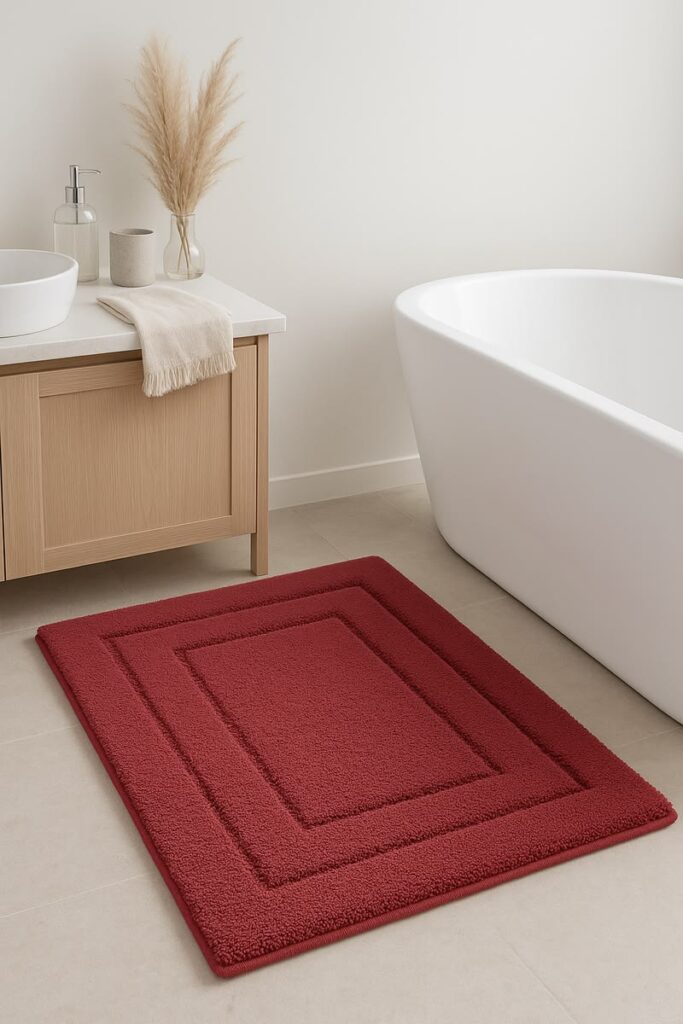
- Avoid the Heat: Never put your rubber-backed rug in a dryer on a high setting. Heat causes the rubber to lose its elasticity and begin to crumble.
- Wash Sparingly: You don’t need to wash your rug every week. Frequent vacuuming or shaking it out removes the dust that degrades the fibers. Wash once every two weeks in cold water.
- Check for Residue: Occasionally, floor cleaners can leave a waxy buildup. If your rug starts to slide, clean your floor with a vinegar-water solution to remove the wax and restore the “bite” of the rubber backing.
Frequently Asked Questions (FAQs)
Q1: Is rubber backing safe for all floor types?
Most are, but be careful with vinyl (LVT) floors. Some older latex backings can cause a chemical reaction that discolors vinyl. Always look for “color-fast” or “TPR-backed” rugs if you have luxury vinyl flooring.
Q2: Why does my rug smell like “new car” when I first open it?
That is the smell of fresh rubber or latex. Because More Textiles uses high-grade materials, this scent usually dissipates within 24 hours in a ventilated room.
Q3: Can I use a rubber-backed rug outside the shower?
Absolutely. They are excellent in front of the kitchen sink or in the laundry room—anywhere where water might splash on a hard floor.
Q4: Does the backing make the rug harder to dry?
Standard rubber backings can slow down drying times. However, our new 2026 “breathable” range at More Textiles is designed to dry 30% faster than traditional solid-back rugs.
Q5: How do I know if a rug is actually from a “Leading Manufacturer”?
Look for export certifications and high-density stitching. A leading manufacturer like More Textiles will have a “heavy” feel to the rug—this density is a sign of quality yarn and a robust backing layer.
Final Thoughts
Safety doesn’t have to be clinical, and luxury doesn’t have to be dangerous. By choosing a rubber-backed rug designed by the experts at More Textiles, you are bringing the best of Indian textile innovation into your home.
Don’t wait for a slip to happen. Upgrade your bathroom with a rug that grips as hard as it comforts. Explore our full export range at More Textiles today.