
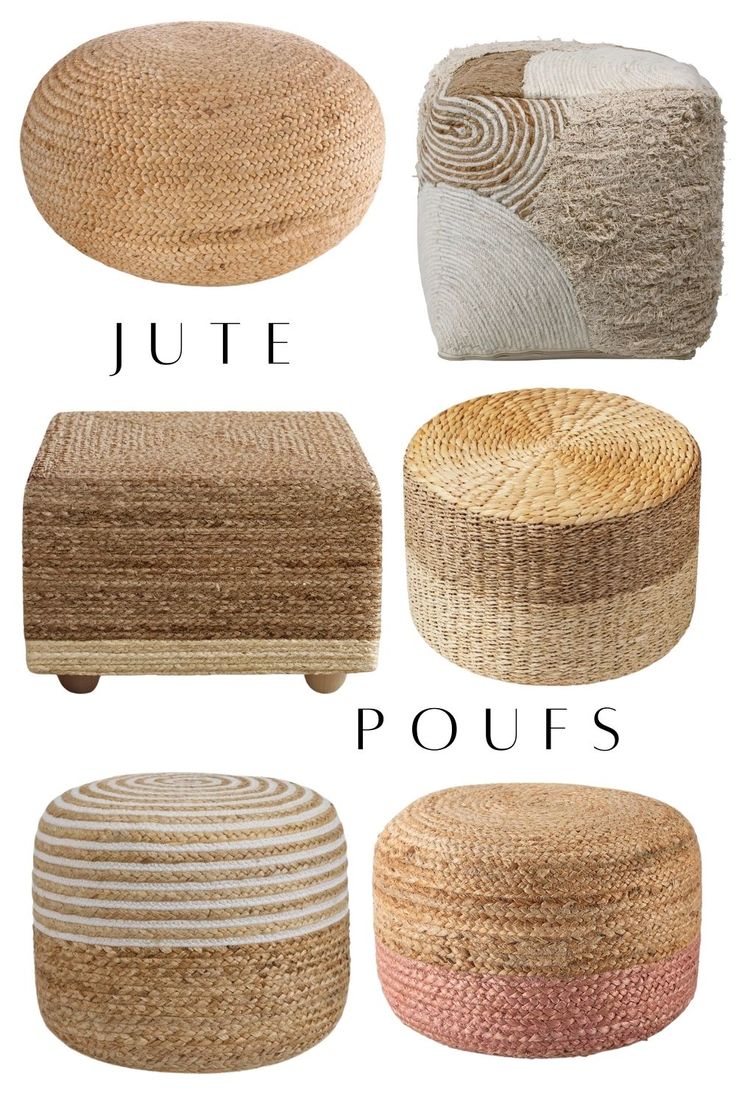
The modern lounge is no longer just a room with a sofa and a TV; it is a sanctuary for “slow living,” a hub for remote work, and a gallery for personal expression. As we move into 2026, interior design is shifting away from rigid, sharp-edged furniture toward organic forms, tactile textures, and multifunctional pieces.
At the heart of this transformation are two of the most versatile accents in home decor: the pouf and the ottoman. Whether you need a sculptural statement piece or a practical storage solution, finding the right “padded perch” can instantly elevate your space from basic to boutique.
As one of the leading manufacturers and exporters of poufs and ottomans in India, More Textiles understands the delicate balance between traditional craftsmanship and global design trends. In this guide, we’ll help you navigate the world of soft furnishings to find the perfect match for your lounge.
Understanding the Duo: Pouf vs. Ottoman
While the terms are often used interchangeably, understanding their structural differences is the first step in choosing the right one for your functional needs.
- The Pouf: Derived from the French word for “puffed,” a pouf is essentially a giant, structured floor cushion. It typically lacks legs and is upholstered on all sides. Poufs are the champions of the “Boho-chic” and “Japandi” styles, offering a casual, low-profile seating option that is easy to move.
- The Ottoman: Rooted in the history of the Ottoman Empire, these pieces are more akin to furniture than cushions. They usually feature a solid wooden or metal frame and often have visible legs. Ottomans are sturdier, making them ideal coffee table alternatives or formal footrests.
2026 Trends: What’s New in the World of Lounging?
In 2026, the “Quiet Luxury” movement has reached floor-level decor. We are seeing a move toward Biomorphic Forms—shapes that mimic nature, like oversized pebbles or mushroom silhouettes.
1. Tactile Textures
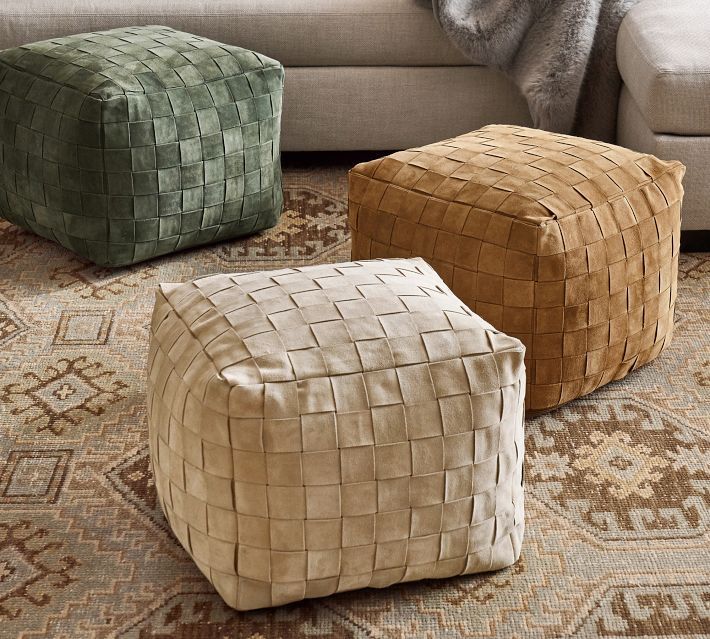
The “Tactile Revolution” is here. High-texture fabrics like premium bouclé, chunky hand-knits, and pleated velvet are dominating the market. These materials invite touch and add a layer of warmth that flat fabrics simply can’t provide.
2. Earthy & Mineral Palettes
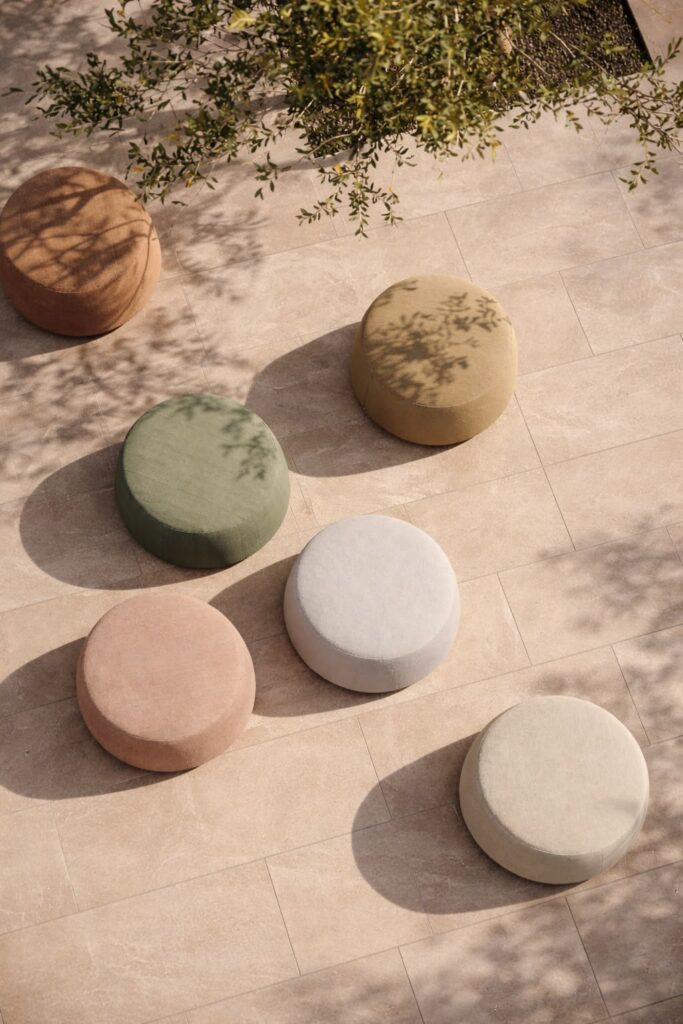
The “new neutrals” aren’t just beige and gray. 2026 is the year of Caramel, Sage Green, and Indigo. These colors ground a room, creating a “hotel-lounge” effect that feels both sophisticated and calming.
3. The Modular Shift
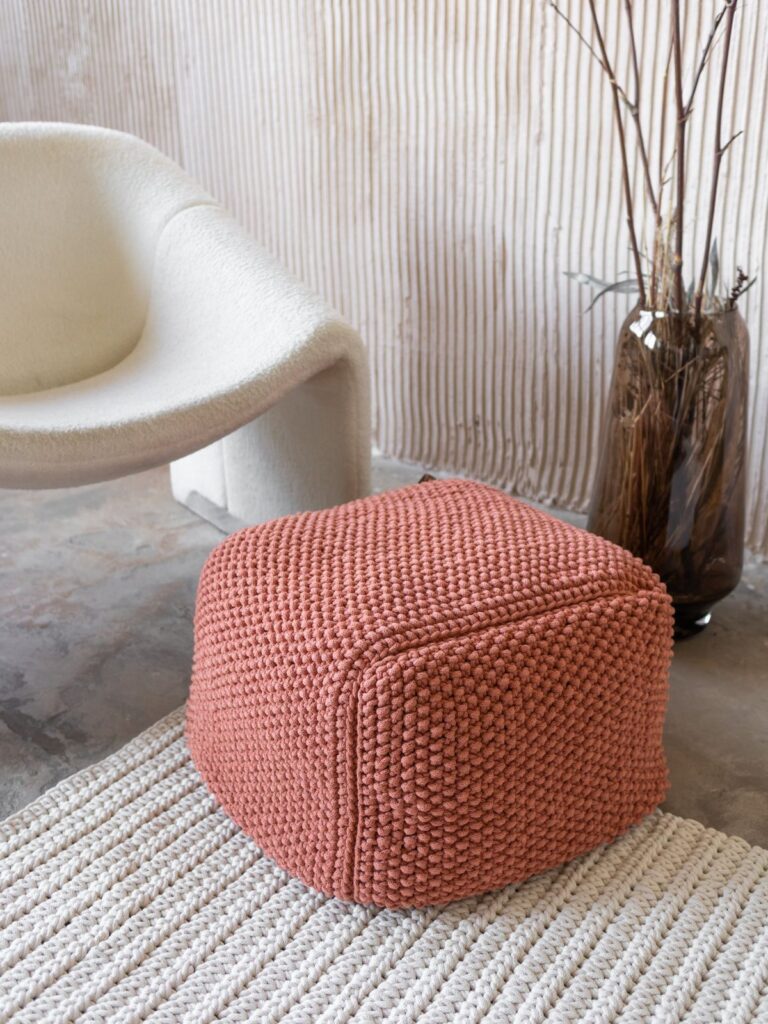
Versatility is the ultimate luxury. Modular poufs with invisible fasteners are becoming popular, allowing homeowners to combine several small pieces into one large lounging island or separate them when guests arrive.
Choosing the Right Piece for Your Lifestyle
When selecting a piece from a global exporter like More Textiles, consider how the item will actually be used in your daily life.
For the Family Lounge: The Multi-Tasker
If your lounge is a high-traffic area with kids and pets, look for Storage Ottomans in durable materials. A square or rectangular ottoman with a lift-up lid is perfect for stashing away board games or “clutter mountains” of toys. Opt for easy-to-clean fabrics like recycled faux leather or heavy-duty jute.
For the Reading Nook: The Ergonomic Companion
A reading corner needs a “mushroom” shaped pouf or a low-profile bean-bag style. These provide adaptive support that molds to your posture. Look for a fill blend of HR foam and recycled beads—it offers the perfect mix of stability and breathability.
For the Small Apartment: The Coffee Table Swap
In compact spaces, a large, flat-topped ottoman can replace a traditional coffee table. Add a wooden or metal tray on top to create a stable surface for drinks and books. This removes hard edges, making the room feel larger and safer.
The More Textiles Difference: Indian Craftsmanship on the Global Stage
India is a global hub for textile excellence, and More Textiles sits at the forefront of this heritage. Choosing a manufacturer that exports globally ensures you receive a product that meets international quality standards while retaining artisanal soul.
- Handcrafted Details: From intricate macramé and hand-tufted cotton to hand-braided jute, the human touch is evident in every stitch. These techniques create a “visual soul” that mass-produced, factory-made items lack.
- Sustainable Materials: As sustainability becomes a non-negotiable in 2026, we prioritize natural fibers like wool, cotton, and eco-friendly jute.
- Global Design, Local Roots: By blending Indian weaving traditions with contemporary Western silhouettes, pieces from More Textiles fit seamlessly into a penthouse in New York or a coastal home in Australia.
How to Style Your Pouf or Ottoman Like a Pro
- The Rule of Two-Thirds: If using an ottoman with a sofa, it should ideally be about two-thirds the length of the sofa to maintain visual balance.
- Visual Movement: Don’t be afraid to mix shapes. A round, textured pouf can soften the hard, linear lines of a modern sectional sofa.
- The “Pop” Factor: In a neutral room, use a pouf in a bold hue—like a rosy terracotta or a deep forest green—to act as a focal point without overwhelming the space.
- Tucked Away: For a clean look, choose poufs that can be tucked under a console table or a floating shelf when not in use.
Frequently Asked Questions (FAQs)
Q: Can a pouf be used as a permanent seat? A: While very comfortable for casual lounging, poufs are “low-profile” seating. They are best used as extra seating for guests or for activities like gaming or reading. For permanent, upright seating, a structured ottoman with legs is a better choice.
Q: How do I clean my textile pouf? A: Most handcrafted poufs should be spot-cleaned with a damp cloth and mild detergent. For deeper cleans, check if the cover is removable. At More Textiles, many of our designs feature high-quality zippers for easy maintenance.
Q: What is the best filling for longevity? A: For a piece that won’t sag over time, look for a “hybrid fill” consisting of high-density foam (for support) and polyester fiber or beads (for softness).
Q: Are jute poufs scratchy? A: Natural jute has a rustic texture, but high-quality braided jute pouf is surprisingly comfortable. If you have very sensitive skin, we recommend our hand-tufted cotton or velvet options for a softer feel.
Q: Why choose an Indian manufacturer for exports? A: India offers a unique advantage: the ability to produce high-volume, export-quality goods while maintaining the intricate, handcrafted details that only skilled artisans can provide. This results in premium furniture at a more accessible price point compared to European luxury brands.
Conclusion
The perfect pouf or ottoman is more than just a place to put your feet up; it’s the finishing touch that brings harmony to your lounge. Whether you are drawn to the rugged charm of braided jute or the plush elegance of velvet, choosing a piece from a trusted manufacturer like More Textiles ensures that your home reflects a commitment to quality, comfort, and timeless style.