
In the competitive world of home décor and educational supplies, the playroom rug is more than just a floor covering—it is a foundation for imagination, a safety net for physical play, and a critical design element. For retailers, interior designers, and educational procurement officers, finding the right wholesale playroom area rug manufacturer is the difference between a product that sits on the shelf and one that becomes a best-seller.
As global demand for ergonomic and aesthetically pleasing children’s spaces rises, understanding the nuances of manufacturing, material safety, and bulk sourcing has never been more vital. This guide explores everything you need to know about the playroom rug industry, from the factory floor to the final retail display.
1. Why the Manufacturer Choice Matters in the B2B Space
When sourcing at scale, you aren’t just buying a product; you are entering a partnership. A top-tier manufacturer acts as an extension of your brand.
- Quality Consistency: Unlike one-off artisan pieces, wholesale manufacturing requires rigorous quality control (QC) to ensure the 1st rug is identical to the 1,000th.
- Safety Compliance: Playroom rugs are subject to stricter regulations than standard living room rugs. Manufacturers must adhere to standards regarding lead content, phthalates, and flammability.
- Scalability: A true manufacturer can handle seasonal surges, such as the “Back to School” rush or the holiday shopping season, without compromising lead times.
2. Trends Shaping the Playroom Rug Market in 2026
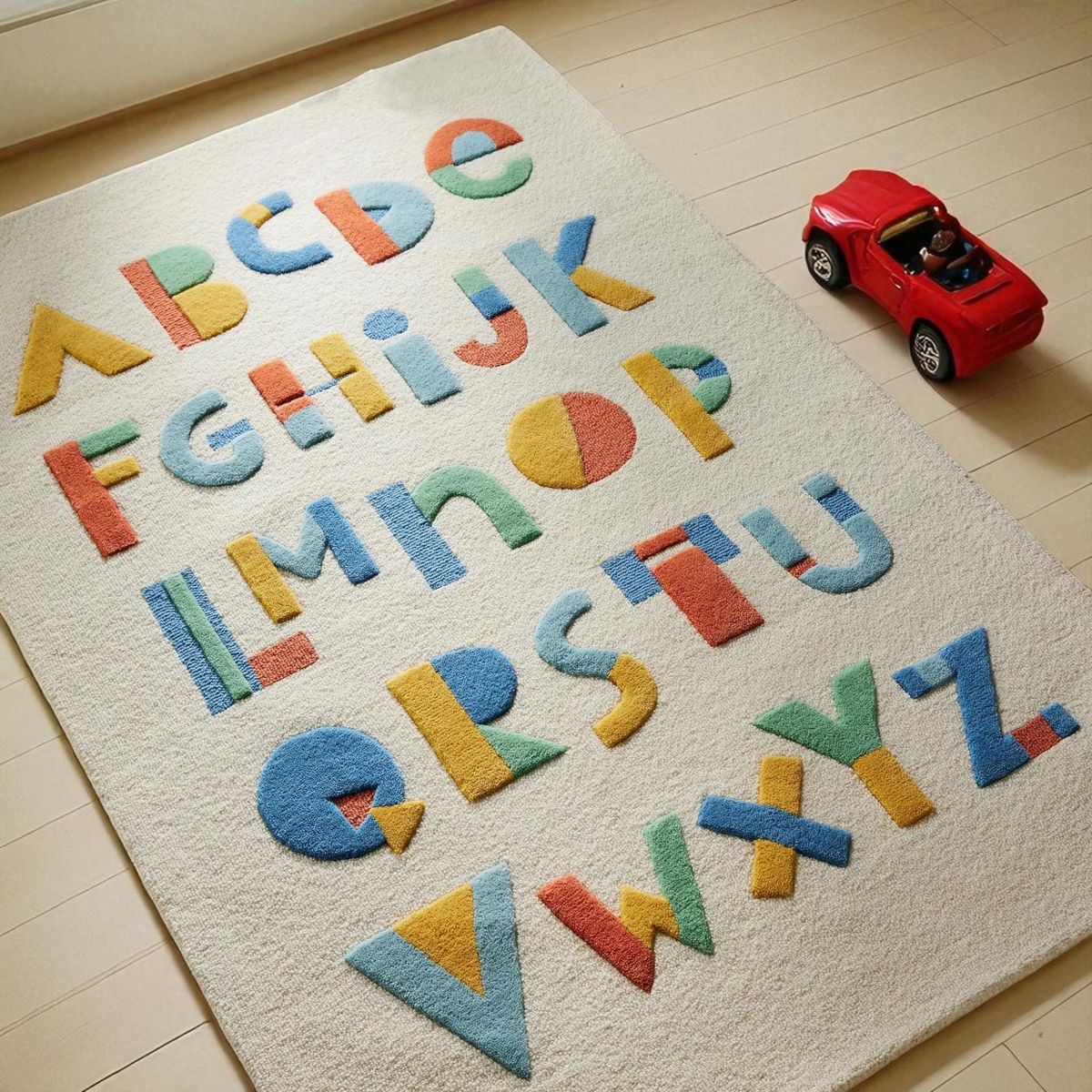
The “playroom” has evolved. It is no longer just a corner with a primary-colored alphabet rug. Today’s market demands versatility.
The “Kid-Sult” Aesthetic
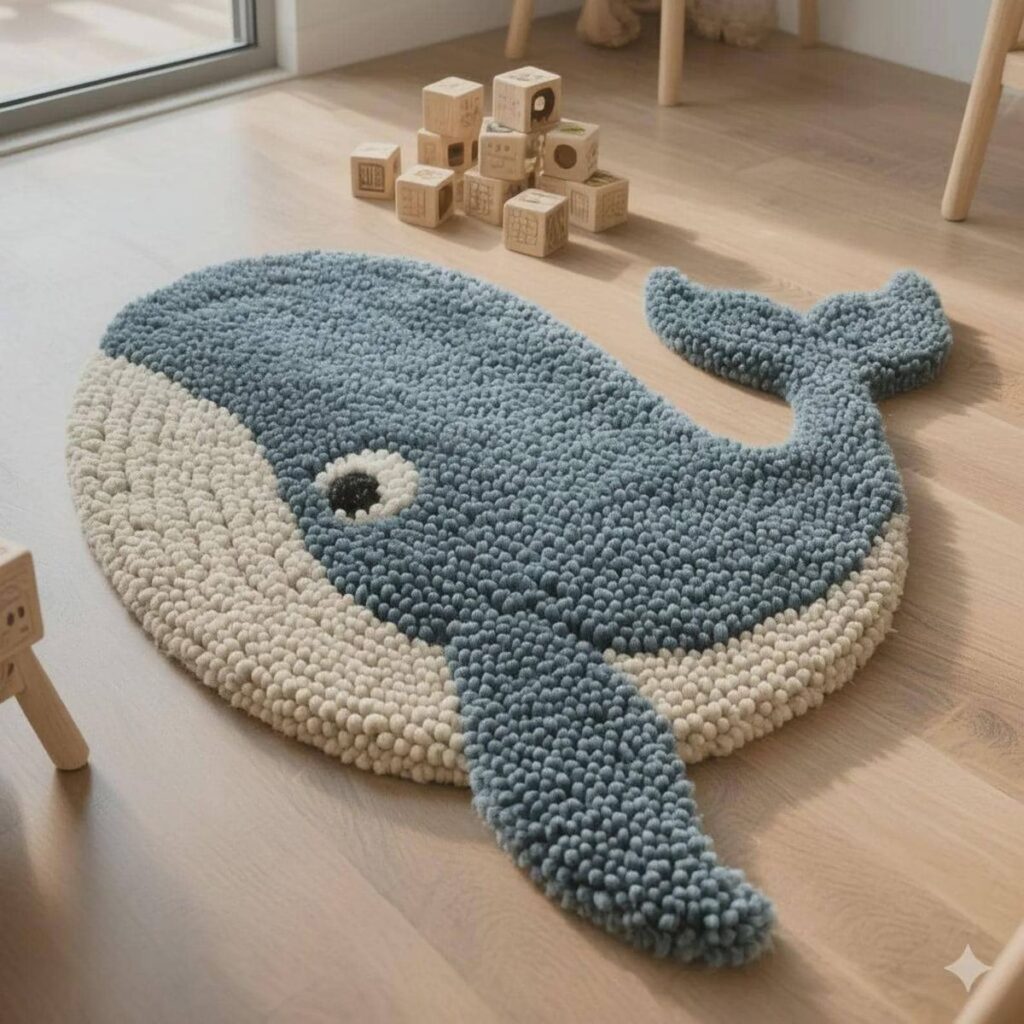
Modern parents are opting for “kid-sult” (kid + adult) designs. They want rugs that are playful enough for a child but sophisticated enough to blend with a Scandinavian or Mid-Century Modern home. Manufacturers are responding with muted earth tones, geometric patterns, and abstract shapes.
Interactive and Educational Surfaces
While aesthetics matter, functionality is still king. Wholesale buyers are looking for:
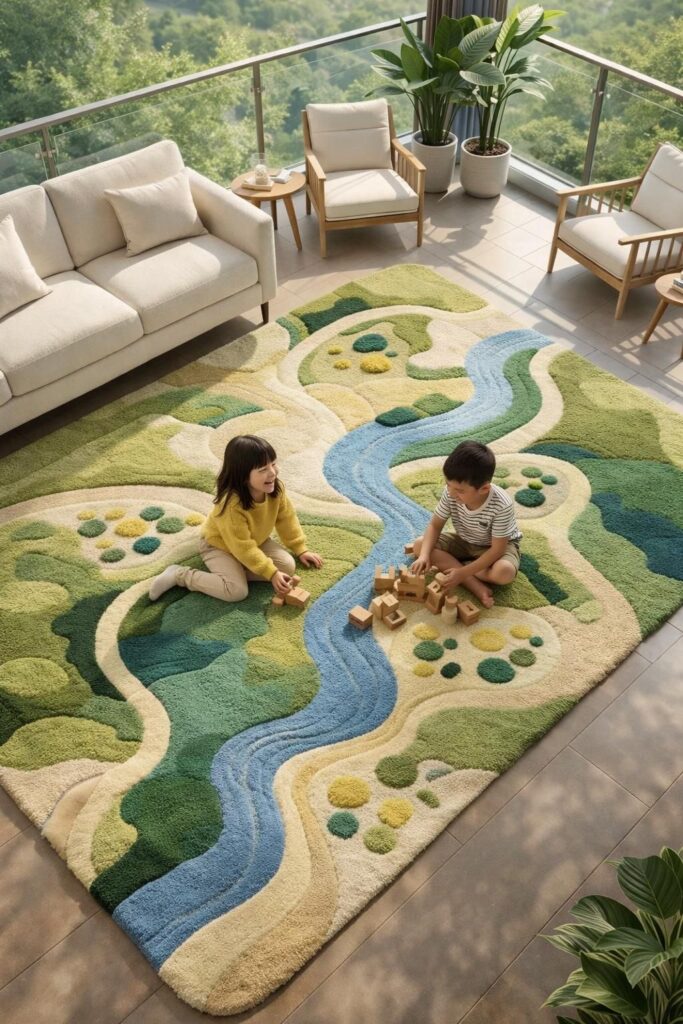
- Roadmaps and Cityscapes: Timeless classics that encourage “unplugged” play.
- STEM-based Designs: Rugs featuring solar systems, periodic tables, or complex world maps.
- Sensory Textures: High-low piles that provide tactile stimulation for toddlers.
3. Materials and Durability: The Manufacturer’s Secret Sauce
As a wholesale buyer, you must understand the “why” behind the fiber. Playrooms are high-traffic zones prone to spills, dirt, and roughhousing.

Synthetic Powerhouses
- Polypropylene (Olefin): The gold standard for wholesale playroom rugs. It is moisture-resistant, stain-resistant, and incredibly affordable.
- Polyester: Known for its vibrant color clarity and soft hand-feel. Modern recycled polyester (rPET) is also a major selling point for eco-conscious brands.
Natural Contenders
- Wool: While more expensive, wool is naturally flame-retardant and durable. It’s often sourced for high-end boutique brands.
- Cotton: Popular for washable rugs—a massive trend in the current market.
The Importance of Backing
A manufacturer’s quality is often hidden underneath the rug. Look for TPR (Thermoplastic Rubber) or high-quality felt backings that offer non-slip properties without damaging hardwood floors.
4. The Manufacturing Process: From Concept to Container
Understanding how your manufacturer operates helps you manage your own inventory expectations.
- Design and Prototyping: This is where CAD drawings become physical samples. High-quality manufacturers offer OEM (Original Equipment Manufacturer) services to create exclusive designs for your brand.
- Yarn Dyeing: Ensuring colorfastness is critical. Solution-dyed yarns are preferred because the color is integrated into the fiber, making it nearly impossible to fade or bleach out.
- Tufting/Weaving: Most wholesale playroom rugs are power-loomed or machine-tufted for speed and precision.
- Finishing: This includes shearing the pile to a uniform height, binding the edges (overlocking), and applying the non-slip backing.
- Inspection: Pieces are checked for “missing tufts,” ink bleeds, or backing delamination.
5. Logistics and Bulk Sourcing Strategies
Sourcing from a manufacturer often involves international logistics. To maximize your ROI, consider the following:
- MOQ (Minimum Order Quantity): Many factories require a minimum (e.g., 50–100 units per design). Ask if they offer “mixed container” options.
- Lead Times: Standard manufacturing takes 30–45 days, plus shipping. Planning 4–6 months in advance of your peak season is industry standard.
- Custom Labeling: Does the manufacturer offer “white labeling”? Having your own branded tags and packaging pre-applied at the factory saves significant domestic labor costs.
6. Sustainable and Ethical Manufacturing
Sustainability is no longer a “nice to have”; it is a requirement. In 2026, retailers are being questioned by consumers about the origins of their products.
- Certifications: Look for OEKO-TEX Standard 100, which ensures the textile is free from harmful substances.
- Recycled Materials: Inquire about GRS (Global Recycled Standard) certified fibers.
- Fair Labor: Ensure the factory complies with BSCI or Sedex audits to guarantee ethical treatment of workers.
Frequently Asked Questions (FAQs)
What is the best material for a wholesale playroom rug?
For the best balance of price and performance, Polypropylene is the industry leader due to its stain resistance. However, Washable Cotton or Recycled Polyester are currently seeing the fastest growth in consumer demand.
Can I request custom designs from a manufacturer?
Yes. Most large-scale manufacturers offer OEM and ODM services. You can provide a digital file, and they will create a strike-off (sample) for your approval before mass production begins.
How do I ensure the rugs are safe for children?
Verify that the manufacturer has up-to-date CPSC (Consumer Product Safety Commission) testing or equivalent international certifications like EN71. This covers lead testing, mechanical safety (no small parts shedding), and flammability.
What are the typical MOQs for wholesale orders?
MOQs vary widely. Direct-from-factory orders usually start at 50 to 200 units per SKU, whereas domestic wholesalers may allow you to purchase in smaller case packs.
How do I maintain the rugs to ensure longevity for my customers?
Advise your customers to vacuum regularly without a beater bar and to spot clean with mild soap. For “washable” lines, ensure the manufacturer’s instructions regarding water temperature and drying cycles are clearly printed on the care label.
Conclusion: Finding Your Ideal Partner
Choosing a wholesale playroom area rug manufacturer is a strategic decision that impacts your brand’s reputation and bottom line. By prioritizing safety certifications, understanding fiber durability, and staying ahead of design trends like “kid-sult” aesthetics, you can build a product line that resonates with modern families.
More Textiles
- Being one of the leading textile manufacturers and exporters in India, we at More Textiles take pride in bringing quality textile products to your homes!
- With over four decades of unfettered commitment and revolutionary product designs in the textile industry in India, we offer innovation-backed world-class textile products to our customers. We constantly strive towards dedication, business ethics, and customer satisfaction.
- Manufacturing superior quality, organic, home textiles in India, we are here in this sector to give your homes, an aesthetic upliftment like never before.